
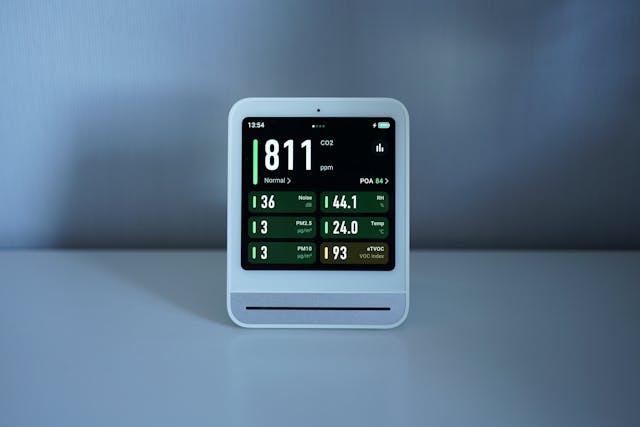
A Small Device That Can Reveal Big Problems
Most homeowners pay close attention to what they can see—roof shingles, wall cracks, water stains, and peeling paint. But some of the most important issues inside a home are completely invisible. Fine dust, excess humidity, carbon dioxide, and airborne chemicals can all affect indoor comfort and health without leaving obvious clues.
That is why air quality sensors are becoming a smart addition to modern homes. These compact devices monitor the conditions you breathe every day and provide real-time information about what is happening indoors.
Why Indoor Air Matters More Than Many Realize
In the Deep South, homes face a unique mix of challenges. Long cooling seasons, high humidity, and frequent storms can create conditions where moisture builds up and ventilation is less effective. When that happens, pollutants can linger indoors.
Common indoor air concerns include:
- Dust and pet dander
- Mold spores
- Volatile organic compounds (VOCs) from paints, cleaners, and furniture
- Carbon dioxide from poor ventilation
- Excess humidity that encourages mold growth
Even well-maintained homes can develop these issues over time, especially when insulation and air sealing improvements reduce the amount of fresh air entering the house.
What an Air Quality Sensor Actually Measures
Not all sensors track the same things, but many quality models monitor:
- Particulate matter (PM2.5)
- Humidity and temperature
- VOCs
- Carbon dioxide (CO₂)
This information helps homeowners identify patterns. For example, humidity levels that consistently rise above 60 percent may indicate conditions favorable to mold. Elevated VOC readings after cleaning or remodeling can reveal lingering chemical fumes.
Practical Benefits for Homeowners
Air quality sensors are useful because they turn guesswork into measurable data.
Detect Hidden Moisture Problems
Persistent high humidity can signal bathroom ventilation issues, crawl space moisture, or HVAC performance concerns.
Improve HVAC Efficiency
Monitoring air conditions helps determine whether filters, dehumidifiers, and ventilation systems are doing their job.
Support Health and Comfort
Cleaner, drier air can reduce allergy symptoms, odors, and that heavy, sticky feeling common in humid climates.
Protect the Home
By catching elevated moisture levels early, homeowners may prevent mold growth and material deterioration.
Are They Worth the Investment?
For most homeowners, the answer is yes. Reliable air quality sensors are relatively affordable and provide valuable insight into conditions that are otherwise difficult to detect. They are especially beneficial in homes with allergy sufferers, pets, recent renovations, or a history of moisture problems.
The Bottom Line
An air quality sensor is not a substitute for regular maintenance, but it is a practical tool for understanding how a home is performing behind the scenes. When homeowners can see what is happening in the air around them, they are better equipped to make informed decisions that improve comfort, protect the structure, and create a healthier indoor environment.